
Do Wheel Spacers Cause Tire Rubbing?
A spacer can remove contact on the inside and create it somewhere else. The useful question is not simply whether the tire rubs. It is where, when, and after which change.
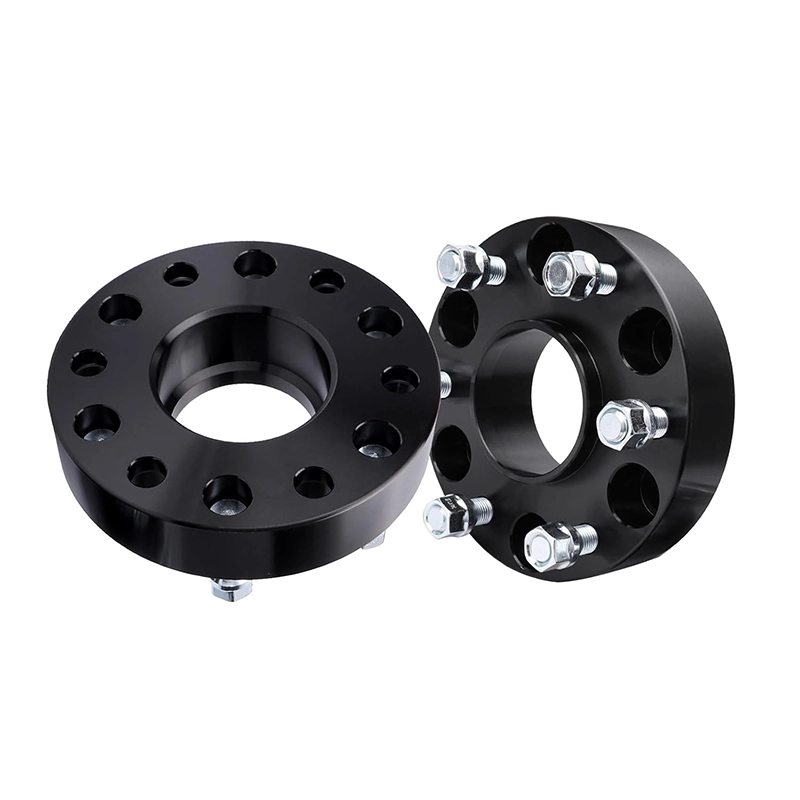
Yes, wheel spacers can cause tire rubbing if the outward shift uses up fender, liner or body clearance. They can also cure rubbing against an inner suspension component. Spacer thickness changes the tire's position, but the contact zone tells you whether moving outward helps or hurts.
Do not order another thickness yet. Mark the exact contact point and reproduce the vehicle position that causes it.
A spacer trades inner clearance for outer clearance
Keep the same wheel and tire, add a flat spacer, and the assembly moves outward by approximately the spacer thickness. That simple movement has two opposite effects.
Clearance normally increases between the tire or wheel and parts on the inboard side, such as a strut, spring seat or control arm. At the same time, clearance decreases toward the fender, outer liner and body edge. A 10 mm spacer is therefore not “10 mm more clearance” in general. It is roughly 10 mm more on one side and 10 mm less on the other, before allowing for movement and shape.
This is why the same spacer may solve one vehicle's problem and create another vehicle's problem. Wheel width, marked offset, tire section width, shoulder shape and actual vehicle geometry all change the starting position. The wheel spacers versus offset wheels guide explains how those variables combine.
Static fender gap is only a first screen. Eibach's current spacer guidance tells the user to choose slightly less than the measured fender gap to avoid tire contact. Its installation instructions also require tire-to-fender clearance to be checked for the actual wheel and tire package. [1]
The remaining margin must cover more than the parked position. Tire sidewalls deflect. Steering changes the tire's orientation. The body and suspension move relative to the wheel. A setup that clears on level ground with the wheels straight may still rub in normal use.
Parked, turning and compressed are three different clearance checks
Most wrong spacer decisions begin with one measurement at one vehicle position. The tire actually occupies an envelope, not a single outline. Check these three states separately.
1. Straight ahead and statically loaded
Record the closest inner and outer points with the vehicle in its normal loaded condition. Look beyond the visible fender edge. The inner liner, fasteners, flare brackets and folded metal edges may sit closer to the tire than the exterior panel.
2. Through the steering sweep
On a steering axle, inspect both directions and intermediate angles. The leading and trailing shoulders of the tire travel through different arcs. Contact at full lock may appear near a bumper junction or liner seam even when the top of the tire has generous clearance.
3. During suspension compression
Vertical movement closes the gap above the tire and may bring the shoulder toward a curved fender surface. Vehicle load, body roll and articulation can change which side is closest. Use an approved workshop method for the specific vehicle. A jack under the wrong point is not a valid simulation and may be dangerous.
The rub mark tells you which variable to revisit
Fresh contact usually leaves a polished patch, rubber transfer, disturbed dust, a loosened clip or a repeated mark on the liner. Do not grind or cut anything until you know which moving part made the mark.
Moving outward may help, but first identify the component and confirm that a spacer will not create a new outer problem.
This is a tire-sweep problem. Check both steering directions and the exact tire shoulder that reaches the liner.
The static outer margin is being consumed by body or suspension movement. A thinner spacer may help if the inner side still clears.
Inspect for a protruding fastener, loose liner, balance weight or another fixed interference. Do not assume spacer thickness is the only cause.
PCD and center bore do not predict tire clearance
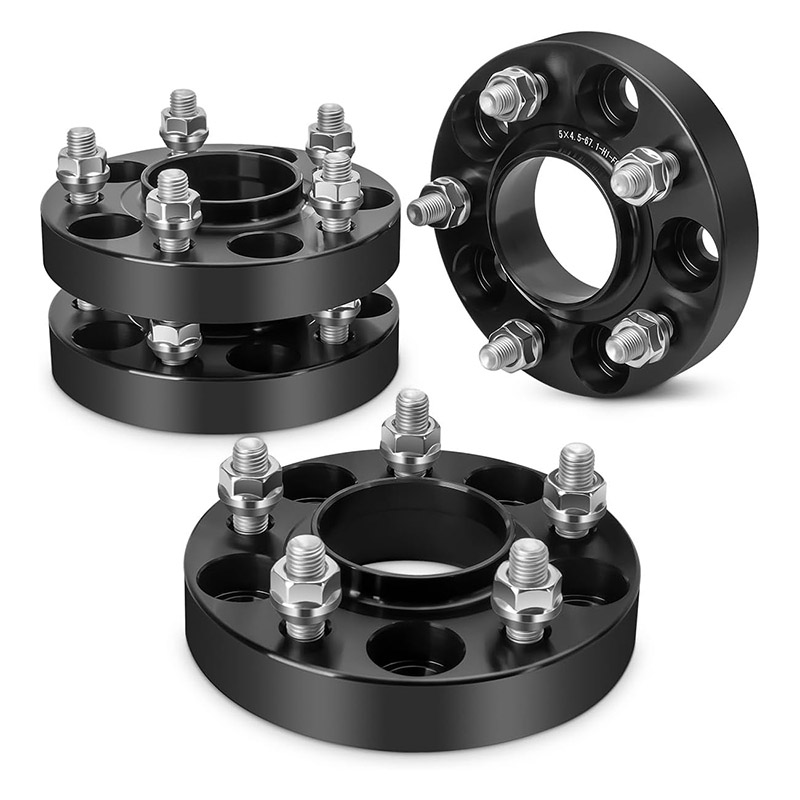
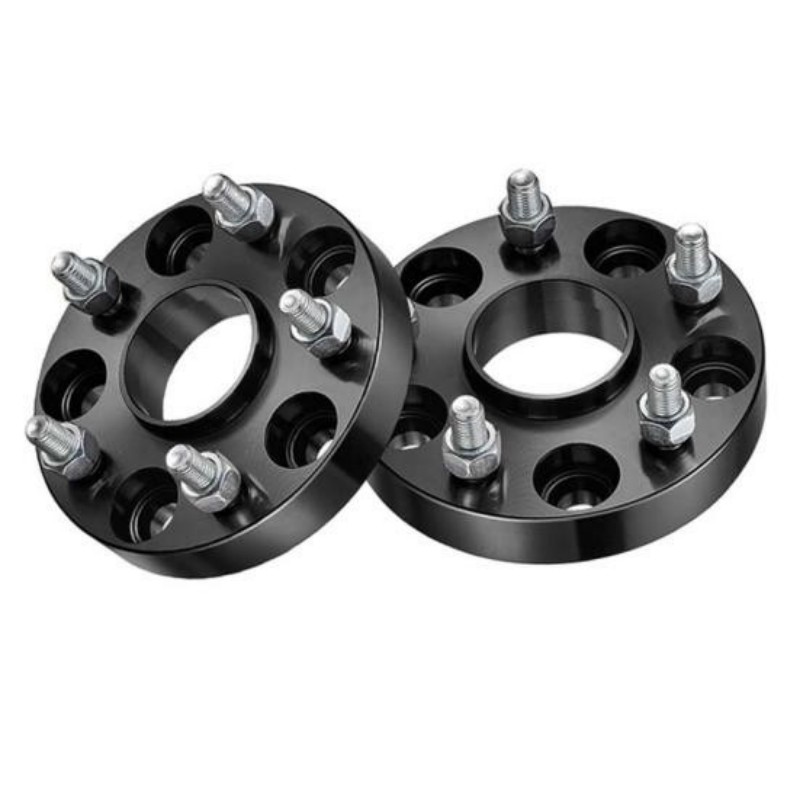
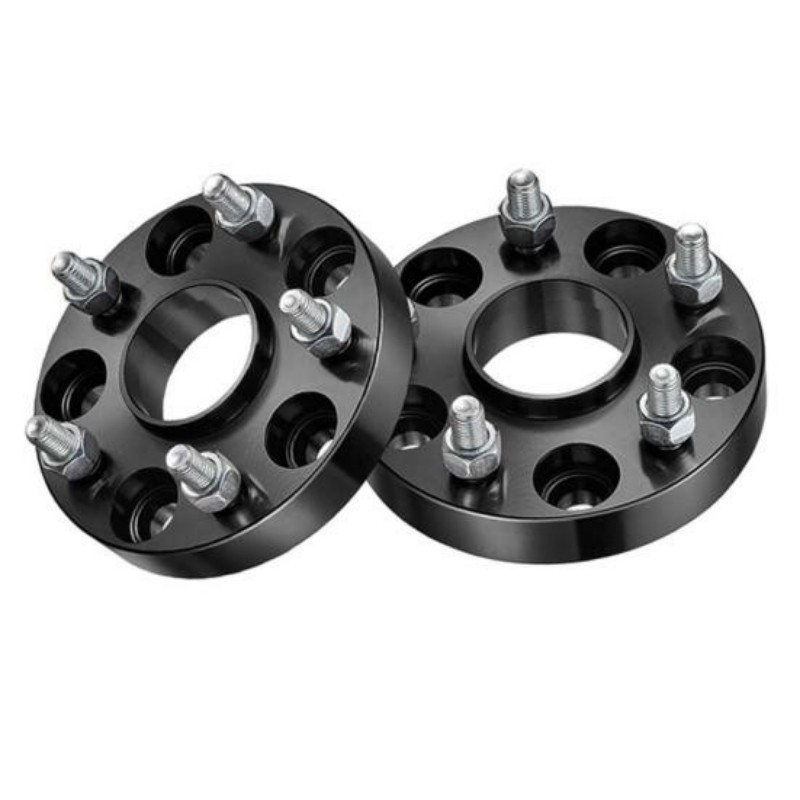
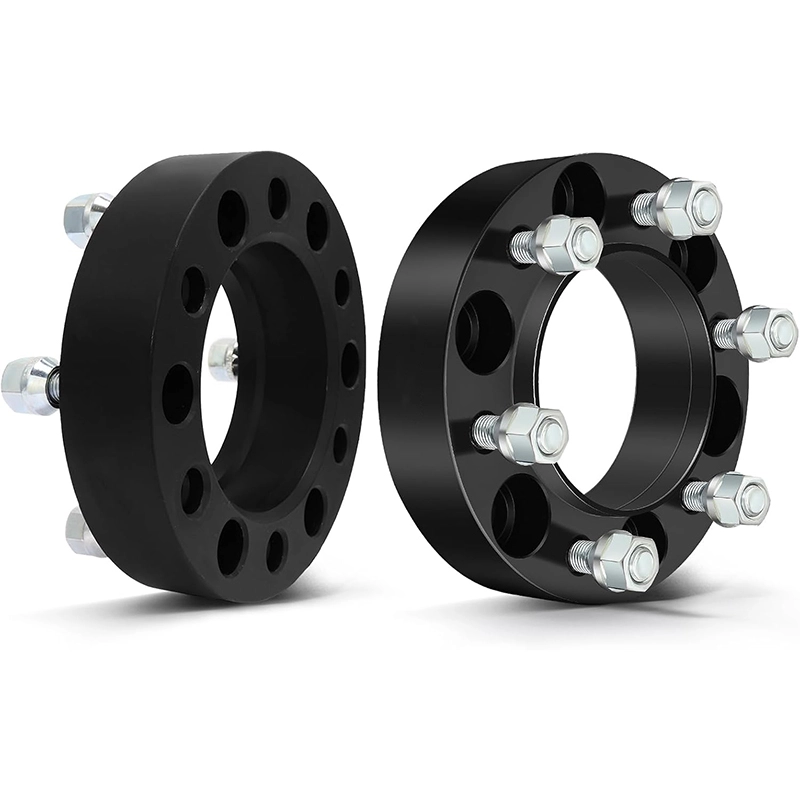
This J&W product example is listed as PCD 6x139.7 with a 95.1 mm center bore and selectable thread options. Those values describe mounting compatibility. They do not tell you whether a chosen wheel and tire will clear the vehicle body.
Thickness, wheel width and offset, tire dimensions, and the vehicle's moving clearance envelope remain separate inputs. A correct bolt pattern can still produce a rubbing setup.
See the published adapter parametersUse timing and location together
The sound alone is a weak clue. Combine the contact location with the vehicle condition that reproduces it.
| When it happens | Likely contact area to inspect first | What the spacer may have changed | Next decision |
|---|---|---|---|
| Only near full steering lock | Front or rear liner, bumper edge, mud flap, sway-bar or suspension area | The steering sweep moved outward | Map both locks. Compare a smaller outward move only after checking inner clearance. |
| Over bumps or with passengers/cargo | Upper liner, fender edge, flare or body seam | Static outer clearance became too small for compression | Recheck loaded clearance and suspension condition. Do not judge from parked stance. |
| After fitting a wider tire | Both inner and outer shoulder zones | The tire envelope changed in addition to wheel position | Use the actual mounted tire dimensions. Spacer thickness cannot be assessed alone. |
| Immediately after spacer installation, once per wheel turn | Fixed hardware, brake component, liner fastener or balance weight | A component may now pass closer to a fixed point, or the wheel may not be seated correctly | Stop the test. Inspect seating, hardware and free rotation before driving. |
| Inner rubbing stopped, outer rubbing began | Fender edge, flare and outer liner | The spacer solved one side of the clearance budget and exhausted the other | Find the smallest outward movement that clears both sides, or reconsider wheel and tire specification. |
| Rubbing plus vibration or looseness | Wheel, spacer and hub interfaces before body clearance | The issue may involve seating, centering or hardware rather than a normal clearance trade | Stop road use and follow the wheel spacer vibration checks. |
Do not use alignment as body clearance. Toe, camber and caster should follow the vehicle's specification. Changing those angles simply to move a tire away from a rub point can create other problems and may not clear the tire through its full path. The alignment guide separates wheel position from wheel angle.
Measure the change before buying another spacer
A rub mark gives you a location. The next task is to determine how much movement is needed and whether the opposite side has room for it.
- Record the exact setup. Note the vehicle and axle, wheel width and offset, tire size and model, current spacer thickness, ride height, and any brake or suspension changes.
- Mark the contact point. Photograph the tire and the neighboring component. Include a ruler or another dimension reference. Record the steering angle, load and road condition that produced the mark.
- Measure both sides of the clearance budget. An inner gap cannot approve a spacer until the outer path is checked. An outer gap cannot approve it until the wheel and tire clear the suspension and brake components.
- Separate wheel movement from tire movement. Spacer thickness predicts nominal wheel translation. It does not predict sidewall deflection or suspension travel. Keep a margin instead of selecting the full measured static gap.
- Confirm the mounting system. PCD, center bore, lip and chamfer geometry, face contact, thread and seat type, usable hardware length, and wheel-pocket clearance all need to match the final thickness.
- Verify the final assembly through its operating envelope. Follow the relevant vehicle and spacer instructions. Confirm free rotation, steering sweep and suspension clearance before normal road use.
For a measurement worksheet, use How to Measure for Wheel Spacers. If several variables changed at once, return to the last confirmed configuration and add one verified change at a time.
Rubbing is a fitment fault, not a normal break-in stage
A light sound still needs a physical inspection. The liner may be rubbing the tread harmlessly at first, or a sharp edge may be cutting the sidewall. You cannot grade the risk from cabin noise.
NHTSA advises stopping use when a tire has physical damage such as cuts, cracks or bulges. Have the tire assessed by a qualified tire professional. Visible cord requires replacement. [2]
Correct the cause before fitting another tire. Replacing a damaged tire without changing the contact path puts the replacement in the same position. Likewise, trimming a liner is not a universal fix. The liner may protect wiring, brake hoses or body joints that still need clearance.
If a spacer was just installed, also verify that the wheel and spacer sit flat and that the hardware matches the application. A tilted or loose assembly is not an ordinary tire-clearance problem. It requires immediate correction.
Common questions about wheel spacers and tire rub
Do wheel spacers always make tire rubbing worse?
No. Moving the tire outward may increase clearance from an inner suspension component, but it reduces clearance on the outer side. The result depends on where the original contact occurs and how the tire moves during steering and suspension travel.
How much does a wheel spacer move the tire?
With the same wheel and tire, a flat spacer moves the wheel mounting position outward by approximately the spacer thickness. This nominal translation does not include tire deflection, body movement, or differences in the shapes of nearby components.
Why does the tire rub only at full steering lock?
The tire follows a swept path as the steering turns. A spacer shifts that whole path outward, so the tire may reach a bumper edge, liner seam, mud flap, or fender area that it clears while pointed straight ahead.
Can an alignment fix rubbing caused by wheel spacers?
An alignment should correct wheel angles to the vehicle's specification, not be used as an improvised clearance adjustment. Find the exact contact zone and correct the wheel, tire, spacer, body, or suspension fitment that causes it.
Can I keep driving if a tire rubs after spacer installation?
Stop and inspect the setup before further road use if rubbing is new, repeated, severe, or has damaged the tire. Cuts, cracks, bulges, exposed cord, or other physical tire damage require professional assessment.